
Creosote Buildup Removal
Creosote can hide inside your chimney long before you notice a problem. This combustible residue builds up as you use your wood-burning fireplace, insert, or stove. Left in place, it can fuel a chimney fire that threatens your home and family. At Potomac Chimney & Masonry Services, we identify the type of buildup, recommend the appropriate cleaning method, and check for conditions that need attention before you burn again.
Ready to Schedule Chimney Service?
What Is Creosote, and How Does It Form?
When wood burns, smoke carries unburned particles, vapors, and tar-like substances into your chimney. As that smoke cools, some of those materials condense and stick to the inside of the flue—the passage that carries exhaust outdoors.
Wet wood, smoldering fires, restricted airflow, and a cool chimney encourage buildup. Even with good burning habits, your chimney still needs regular inspection and cleaning when necessary.
Chimney professionals commonly describe deposits in three stages, or degrees. These describe the material’s appearance and how difficult it is to remove. A chimney can contain more than one type at the same time.
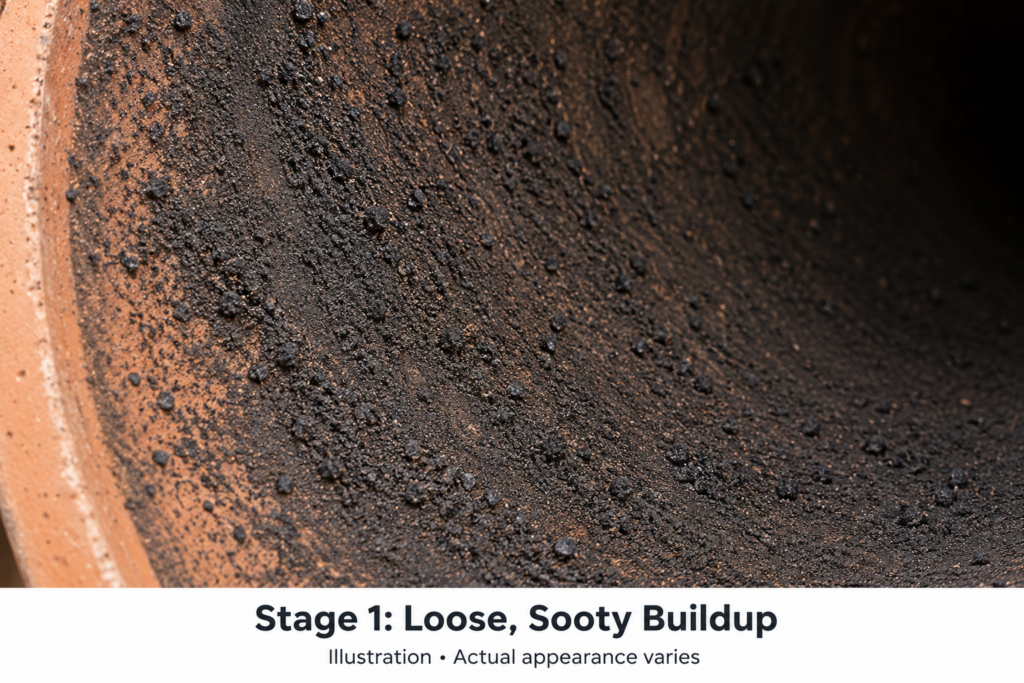
Stage 1: Loose, Sooty Buildup
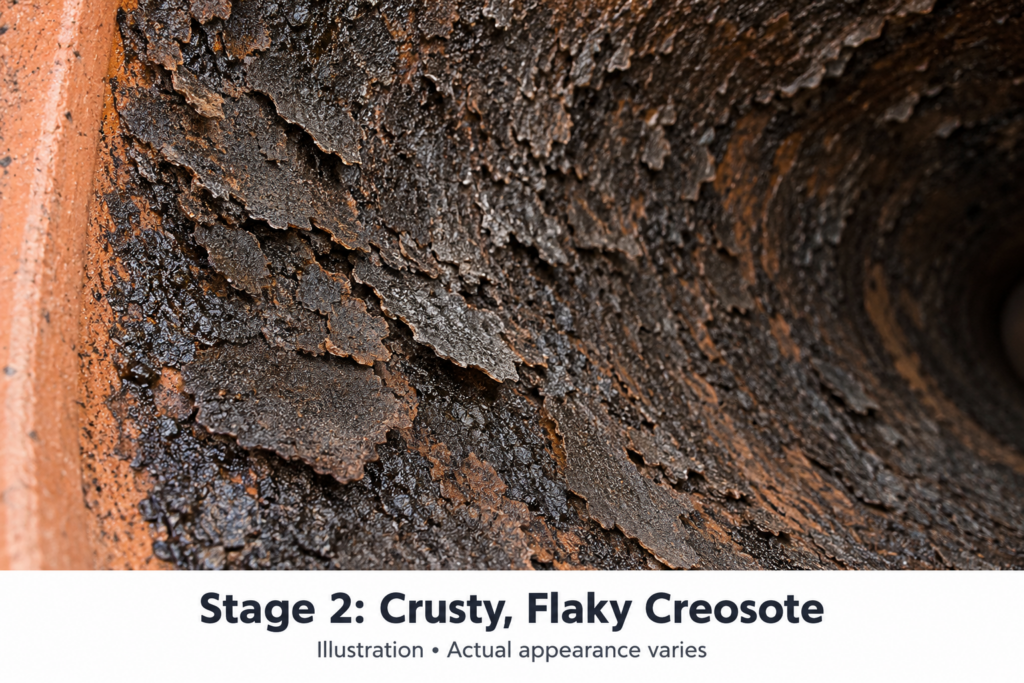
Stage 2: Hard, Crusty or Flaky
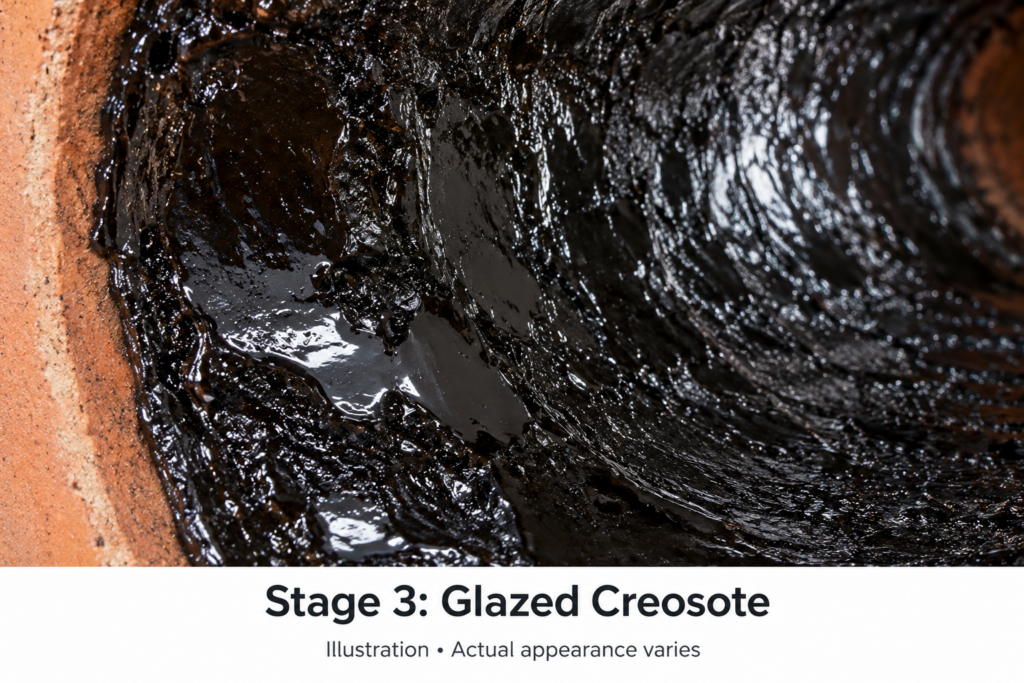
Stage 3: Glazed Creosote
What it looks like
A loose, dusty deposit, often mixed with soot, that is easier to brush away than hardened creosote.
How it forms
Particles and condensed wood-burning byproducts collect on the chimney’s interior during use.
How we remove it
Professional sweeping generally removes this loose material using brushes and collection equipment suited to the chimney.
Why professional cleaning matters
An easily brushed deposit still needs to be removed. A professional also checks accessible areas for obstructions, damage, and heavier buildup that may be hidden farther inside the system.
What it looks like
A more stubborn deposit that may appear as hard, dark flakes or a crust attached to the chimney walls.
How it forms
Conditions that encourage smoky, incomplete combustion and condensation—such as damp wood, inadequate airflow, and cool flue temperatures—can produce more difficult deposits.
How we remove it
Ordinary brushing may leave material behind. Depending on the deposit and liner, professional removal may require specialized mechanical cleaning or treatment followed by sweeping.
Why professional cleaning matters
The cleaning method must match the chimney. Overly aggressive tools can damage a liner, while inadequate cleaning can leave combustible deposits in place.
What it looks like
A dense, shiny coating that can resemble black glass or hardened tar. Some deposits may also be sticky.
How it forms
Tar-rich wood smoke condenses and adheres to the flue, particularly under conditions that promote incomplete combustion and cooling. Glaze can develop without a homeowner noticing the earlier, looser forms.
How we remove it
Glazed creosote typically resists routine brushing. It may require professional chemical treatment followed by physical removal.
Why professional cleaning matters
A routine sweep may not be enough to remove glaze. The deposit needs to be evaluated and treated appropriately, and the chimney must be checked for underlying problems. If glazed creosote is identified, stop using the fireplace or stove until a qualified professional has addressed it.
Our Solution for Glazed Creosote
When chemical removal is appropriate, Potomac Chimney & Masonry Services uses PCR—Poultice Creosote Remover.
PCR is a professionally applied treatment designed to remove third-degree glazed creosote from clay flue tiles and stainless steel chimney liners. It dissolves and absorbs creosote as it dries, allowing the treated material to release from the surface.
Our treatment process includes:
-
Evaluating the deposits and chimney materials to determine whether PCR is appropriate.
-
Applying the treatment to the affected surfaces.
-
Allowing the material to dry according to the manufacturer’s instructions and site conditions.
-
Sweeping out the remaining treatment and loosened deposits.
-
Inspecting the exposed liner for cracks, damaged joints, or other defects that may require repair.
Heavy deposits may need additional applications. Creosote removal does not repair a damaged liner, so cleaning and inspection are both important before the system returns to use.
Why Removing Creosote Matters
Creosote is fuel inside your chimney. Removing it reduces the combustible material available to feed a chimney fire.
Heavy deposits can also restrict the exhaust passage. Professional service addresses buildup while checking for venting concerns and damage that cleaning alone cannot correct.
A chimney may look fine from the fireplace opening while problems remain out of sight. Schedule an inspection every year, with cleaning and repairs as needed.
Help Reduce Future Buildup
After your chimney has been serviced:
Burn dry, seasoned firewood. Aim for a moisture content below 20%, measured on a freshly split surface.
Follow your appliance’s instructions for loading and airflow.
Avoid prolonged, smoky, smoldering fires.
Schedule annual inspections and any recommended cleaning.
Good burning habits help limit future deposits. They cannot remove creosote that is already there.
Never Try to “Burn the Creosote Out”
Deliberately igniting creosote creates a chimney fire and puts your family and home at risk.
We sometimes hear homeowners say they build an extra-hot fire to burn their chimney clean. A fire that seemed to go out without incident may still have damaged the chimney.
Chimney-fire heat can crack clay flue tiles, displace mortar, and damage metal chimney components. Those failures can allow heat and flames to reach nearby wood framing. Some chimney fires burn quietly and leave damage that is discovered only during an inspection.
If you suspect an active chimney fire, get everyone outside and call 911. Do not attempt to burn through it or keep using the appliance. Then call us to do an inspection of the system.